Showing posts with label #teachers. Show all posts

Saturday, August 17, 2019

Using Math Centers in the Upper Elementary Classroom


Practice makes perfect, right?  That is how the saying goes and I believe there is a lot of truth to it- especially in Math Class!

     One way I try to give my students time to practice is by using Math Centers (or Math Stations).  Math Centers are not just for the primary grades.  Used effectively, math centers in the upper elementary classroom is a great way to allow students to hone their math skills.

     There is no "easy setup" to begin math centers.  In order for them to be effective for YOUR classroom, centers are best tailored to the individual needs and behaviors of your class.  I have often had to try different ways to run math centers in a single year (looking for the best "fit" for my class!).

     That being said, a basic plan can get you on the right track to making math centers work for you- how you implement them is up to you!
     Here is how I have typically setup my math centers in the past.  This format has been used in 5th grade classrooms.

    Center 1: Lesson Practice (this center/ station is a chance for students to immediately practice 
the lesson of the day.  This can be done with worksheets, math books or other means 
of trying out the new concept.  Students can work together or individually).
    Center 2: Math Games (students work on practicing current skills and mental math skills by playing games in a small group setting).
    Center 3: Math Task Cards (Task cards related to the current math unit).
    Center 4: Write about Math (Students use their math journals to answer a writing prompt related to their current lessons).
    Center 5: Work with teacher (Teacher calls students in groups to work on lessons and skills based on student needs.  I usually pulled students based on their exit ticket results from the lesson the day before).
   Math Centers can be a lot of fun, just remember to have students practice expectations (transitions, cleaning up, etc) multiple times to help make things run smoothly.

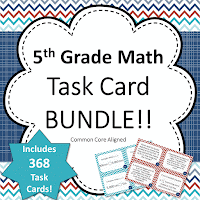
Looking for materials to use during math centers?  Check out my 5th Grade Task Cards Bundle.

 5th Grade Math Task Card Bundle


Wednesday, June 28, 2017

Wednesday Weekly 5 Best Under $5 - 6/28/17

Here's a quick rundown of the best 5 TpT items, in no particular order, for this week. Of course, all items are under $5, as well! With a variety of subjects and a wide range of grades, there just might be something that you can use, so continue to read below and see!


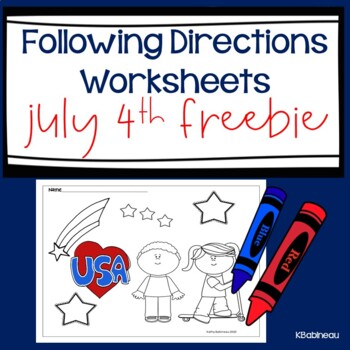
By Kathy Babineau
ELA/Special Education; Grades K-4


This is a super easy to use low-prep activity that the kids love! Great activity for paying attention and following directions. To use, simply make enough photocopies of the “coloring pages” as you need for your class or group. (I have done these activities with entire classrooms, in small groups and with individual students.) Only one copy of each of the “directions” pages is necessary, as these are designed to be read aloud by the teacher/speech language pathologist. Distribute the “coloring pages” to your students, and then instruct them to take out pencils and crayons and to listen to your directions carefully. I often encourage my students to ask for clarification or repetition as needed. Then, read the directions, one at time, and challenge your students to follow your directions carefully as they color and add detail to their papers.

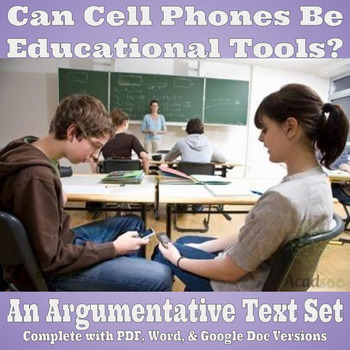
By A Teacher's Teacher
ELA/Writing; Grades 7-10


This four-passage text set is accompanied by an argumentative prompt regarding the topic of cell phones in the classroom. It's a perfect assignment to engage typically students of all ability levels due to the interesting topic. It will also strengthen your students experience with the idea of using the text to support their writing, rather than their own personal experiences. Modeled after AIR Testing, which is used in numerous states across the country, it would also fit well into a PARCC simulation. The text set, itself, is 7 pages long.
You will receive the text set and prompt in a ready-to-use format for easy accessibility (.pdf) as well as a file that you can open and edit, to best fit for your own classroom needs (.docx). In addition, the option to use a quick-sharing link for Google Docs is also provided, in case you use the Google Suite of Apps. All you'll have to do is open the Word or PDF file labeled for Google Docs, copy the link provided, and paste it into your web browser. From there, follow the directions on the Word document or PDF to save it to your Google Drive


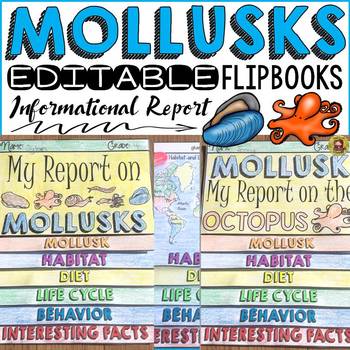
By Teach to Tell
Science/ELA; Grades 2-6


Have your students write informational reports on 11 mollusks. These flipbooks scaffold the structural components of an Informational Report at each stage of the writing process. This resource can be used as a stand-alone flipbook or in an interactive notebook. It includes editable flipbook templates (2-7) in blackline to print, a self-editing checklist, a peer-editing checklist, 4 teacher marking rubric formats, and 4 different styles of writing sheets. Check out the details on the product description page for more information about this great product!

By Globe Trottin' Kids
Geography; Grades 2-4


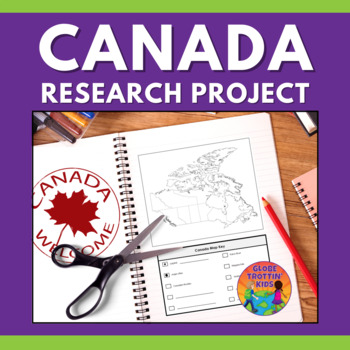
Students complete a variety of activities as they research the geography and culture of Canada. The activities are glued into a separate notebook (not provided), creating a wonderful artifact to share and keep. Activities include maps (labeling maps; creating a compass rose and a map key), country stats (recording the population, area, products, and climate), Flag (coloring a sample flag; writing a description of what the colors and symbols mean), and more (see full description on the product page). Also included are student passports and stamps, suggested research websites, a 4-point rubric, and an answer guide, as student responses will be varied. Globe Trottin' Kids country research projects can be used as an independent learning center, a small group cooperative learning experience, or a whole class activity.

By The Balanced Classroom
Math/ELA; Grades 2-6


The basketball fans in your classroom will enjoy learning about the inventor of the game with this common core aligned integrated unit. This pack contains an original nonfiction selection title "Who Invented Basketball?" with follow up discussion questions and a main idea and details related organizer. Common Core Contents include an article on who invented basketball with work on main idea and supporting details (RI.2) and discussion cards (RI.1) as well as work on language, writing, multiplication, even-and-odd numbers, and much more.  See the full description on the product page to learn more about this terrific product!

As always, I encourage comments below and any ideas or suggestions by tweeting me @ATeachersTeach.

A Teacher's Teacher

Monday, April 10, 2017

April Teacher Talk

Posted by Deann Marin of Socrates Lantern


It's April and so many groovy things are happening this month, Easter, Passover, spring vacation and so much more. Be sure to stop by and see what these teachers are doing in their classrooms and gather some great tips and ideas.

If you're interested in joining this unique group of teacher entrepreneurs, blogging buddies and/or our blog linky, sign up here....The Best of Teacher Entrepreneurs Marketing Cooperative. If you decide to join, be sure to mention one of our names.
************************************************************
If You Love Jelly Beans
By Deann Marin of Socrates Lantern
Can’t you just smell spring in the air? Daffodils beginning to bloom, Lilac trees starting to flower, and Lilies of the Valley popping up. I just love the aroma. Not only is my birthday in April but it brings us Passover, Easter, and one that you may never have heard of, can you guess? If you said Jelly Bean Day, you’d be right. It's April 22nd.
**************************************************
Plan a Portfolio Party
By Retta London of Rainbow City Learning

Plan a celebration for your young writers as they bloom in the Spring!
***************************************************
April Math FUN!
By Sara Snyder of Snyder Classroom
Make Math FUN this Spring! These spring math riddles are great for reviewing previous topics or practicing current skills. These riddles can be helpful in your classroom at this busy time of year. (And sneak a little fun into the classroom) I have made these math riddles to combine fun and learning for this time of year.
***********************************************
How Many Ways are Words Related?
By Susan Berkowitz of Susan Berkowitz
Individuals who use AAC need to learn to take a conscious path to the words they need. If they want an apple, they need to think about how to navigate to categories -> to food -> to fruit -> to apple. SLPs can help them learn how to do this.
**************************************************
6 Tips to Support English Language Learners in Your Classroom
By Kathy Simpson of Sunshine and Lollipops
Do you have English Language Learners in your classroom? If you do...you will want to take a look at this post and discover 6 easy and fun tips to support your ELL students. I am sure you will LOVE #1!
***********************************************
Apollo 13: The Ultimate STEM Challenges
By Kerry Tracy of Kerry Tracy
The Apollo 13 mission shows how seemingly insurmountable obstacles can be overcome with scientific reasoning and problem solving. Specifically, the carbon dioxide filter fix shows why STEM Challenges are so much more than just "fun."
**********************************************
The Magic of a Circle
By Kathie Yonemura of Tried and True Teaching Tools
Using only a circle, students fold and learn a multitude of geometric terms. This is a fantastic way to teach geometry and for students to experience more than just shapes!
*************************************************
Increase Engagement and Maintain Rigor-Hands-on Fun in the Upper Grade and Middle School Classroom
By Marcy Howe of It's a Teacher Thing
Maintaining student motivation is important during any time of year, but it's even more crucial when they return from a break. I save several of my "great" activities for those Mondays after a week off.
**********************************************************
Poppies & Pantoums: Poetry Comes Alive with Georgia O'Keefe
By Tracy Willis of Wild Child Designs
4th and 5th grade students explore the life of Georgia O'Keefe via a biography and her fabulous artwork. We look closely at the natural world using photographs and author Pantoum poems, a cool poetic form from Malaysia. We recuperate from our testing angst with a poppy craft.
***************************************************************
Painting Poetry: Children's Voices
By Virginia Musmanno of Reading Spotlight
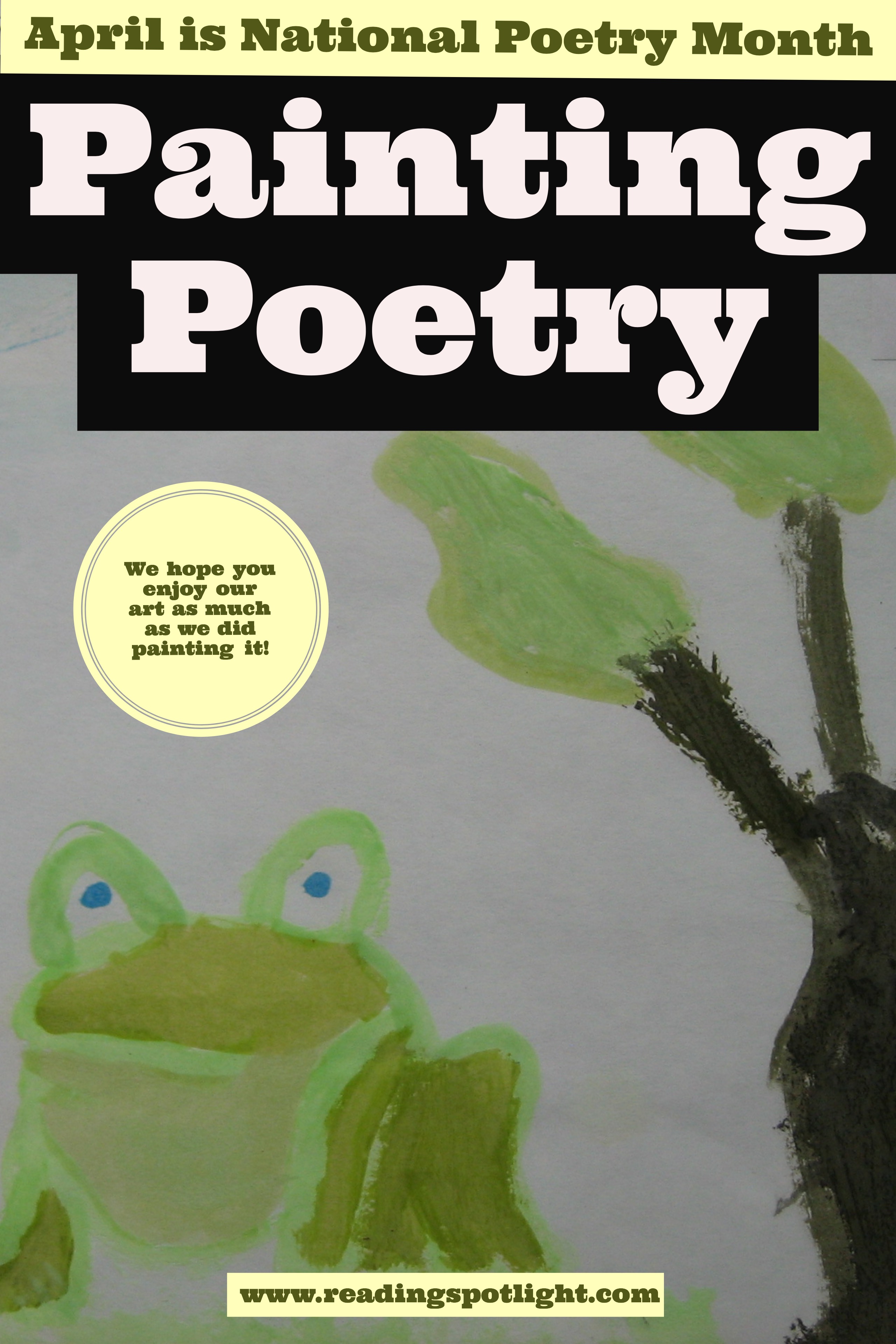
We hope that you will take one minute out of your busy day to enjoy a slideshow of our paintings of poems. We hope that you enjoy seeing them as much as we enjoyed painting them!
**********************************************************
Make sure you visit these great posts from some awesome educators.


Thursday, December 3, 2015

FREE MATH LESSON - "Multiplication Strategies"

By:  The Owl Teacher
Grade 3 Math

Are you looking for some fun ways to present the various multiplication strategies such as using arrays, number lines, groups, and repeated addition?  Why not try download my FREEBIE!

https://www.teacherspayteachers.com/Product/Multiplication-and-Division-Math-Workshop-FREE-Sampler-2213863

In this FREE lesson, you will get one complete lesson from my Multiplication and Division Unit where it is structured in the workshop model and comes with everything you need to teach this lesson!  It starts with a warm up activity, a mini-lesson that is scripted for you in case you are not familiar with the workshop language, the activities to complete the guided practice and independent activity, and a closing activity.  This helps you meet the Common Core Standards of 3.OA.7 and 3.OA.1!

Students can complete one of the following activities (ALL included in this FREE lesson download!):

 Soaring Strategies With A Hot Air Balloon!
A Super Star Mobile 
Create a 4 Door Foldable! 

Math multiplication strategies array grouping repeated addition FREE
  Click on the picture of the Sampler Cover above to download the FREE MATH LESSON multiplication strategies!

And check out the full complete Math Workshop Units (and all the others!)  at my Teachers Pay Teachers Store!
Other related products you may enjoy:
Multiplication Fact Fluency Program
Multiplication Tic-Tac-Toe Task Cards

And don't forget to follow me for more freebies, tips, and other fantastic ideas!


Copyright The Owl Teacher.  All rights reserved by author. This product is to be used by the original downloader only. Copying for more than one teacher, classroom, department, school, or school system is prohibited. This product may not be distributed or displayed digitally for public view. Failure to comply is a copyright infringement and a violation of the Digital Millennium Copyright Act (DMCA). Intended for classroom and personal use ONLY.  I love it when you share my products with your colleagues but please do so legally!  Thank you!

Sunday, August 2, 2015

Engaging Students in Math


One of the largest things I had to do teaching middle school math was to find ways to engage students in math that absolutely did not like math or struggled with mathematics.  

Following are some strategies that drive my lesson designs I utilized to assist my students!


VISUALS - I learned that by engaging visual learners and students who ‘do not like math’ with entertaining visuals and color it grasped their attention.  For example, when I introduced the definition of Pythagorean Theorem to my students I used a hippo for the hypotenuse and legs for the legs of the right triangle.  I engaged students first with a discussion on why a hippo was sliding down the hypotenuse and why he was on a sled…that year it was January and we had a lot of snow and ice.  This was just what I needed to reach and engage my students.   

After this, I taught my unit on Pythagorean theorem and kept referring to the hippo and legs while students who struggled to solve equations learned this task.  Even students who struggled, all I had to say was ‘think of the hippo’ and they would remember the equation and visualize how to solve the problem.  (Let me just say, the day I gave an assessment and said ‘think of the hippo’ and I could see the students picturing it in their head I was ecstatic!)  Another strategy I brought in to my classroom was color for a few reasons.


COLOR – While teaching the Real Number System the same year I was teaching Pythagorean theorem, some of my students struggled to remember which numbers went into which group.  For this reason, I created a poster that was color coordinated for students.  I then had them complete a foldable that I encouraged my students to use the same colors as the chart and write the numbers and classifications in the same color as the poster.   With the graphic organizer, I had markers & color pencils for students to write in the information in the same color as the poster. These activities and more assisted students in remembering which numbers went in which classification by identifying them with a specific color.  Color coding really helped my students focus on the Real Number Classification system.


This is why so many of my resources I’ve brought color into them.  For example, even my Decimals Graphic Organizers, I used in 2015 in a class that enjoyed colored pens.  I allowed them to focus on each operation with decimals with that color pen.  For example, Red for adding decimals, green for subtracting, purple for multiplying, and orange for dividing.  Yes, I even let them solve problems with specific colors – It helped!  One student who hated math, as she told me, did not resist when I allowed that student to use color pens to do the guided notes and practice problems in color!  

Finally, I learned not to fight the colored pen issue with that student, just incorporate it if I can! If it engages the student and assists their learning...let them use color pens. (Note: on assessments, graded work, tests, etc., I wanted them using pencil, some did not like that, but, for me it is hard to see and grade various colors).  The other thing I learned was how to break it down and try to bring in humor while relating math skills to my students.


BREAK IT DOWN – At first I found this difficult and did not understand about ‘breaking down’ a math problem and I had to learn quickly how to break down larger units and problems for students.  One example: X4y3/x2y1  - In order to break this down I had students write it out just like they did exponent problems. x • x • x • x • y • y • y  / x • x • y and then cross out which fractional part made one whole and then rewrite what was left. I would also try and bring in how what we were working on may relate to their life. Why would you relate math to meat & broccoli?  It engages the students… For example, I would explain that a student could have a meal they were fixing that they need to divide between people.  X being the meat, Y being the broccoli.  (One x over one x is one serving of meat - one y over one y is one serving of broccoli).  One meal is one X and one Y, the equation is the meal they fixed. How can you divide up the whole equation (the whole meal you cooked) into a full meal for one person? How much meat and broccoli will you have left over? 
Another way to engage my students was with brainteasers and humor that led into a unit I was getting ready to teach.


HUMOR/BRAINTEASERS – I enjoy trying to bring humor and thought into lessons.  For example, starting a unit on angles, I started with a brainteaser.  “Which angle is the best?” was written large on my board.  Students entered the room and I asked them, to think about this question.  Many came up with various angles, one student liked 45o angles, one liked 90o angles, etc..  After discussions I uncovered the words ‘the right angle’.  You are ‘right’.  My students at first did not understand how each one with varying answers could be correct.  Therefore, we discussed that it does depend on the situation which angle is the best.  For example, solving for a missing angle, right triangles, and more.  After our discussion, I went into the unit on how angles relate, how do we solve for these angles and more.  These are a few ways I've engaged my students in math that 'just do not like math' or 'struggle with math'.


Thank you for allowing me to share just a few strategies I’ve used with my previous students.  I hope that this article and me sharing just a few of my successful stories helps you and your students.  Again please note, I do not claim to be the expert of experts, I just enjoy reaching all of my students by bringing in visual arts, humor, design, their life, and more to help them be successful.

Best Wishes,
Mary Moore
You may find the resources discussed in this blog at My TpT Store ~  Moore Resources
Follow me on Pinterest ~ Moore Resources
Follow me on Facebook ~ Moore Resources

Visit my Blog~ mooreeducresources.blogspot.com